
Ask the internet “where to eat at Changa Manga” and you will get hotel listings for towns forty minutes away — none of them answering the actual question. So here is the real answer, from the people who live with this forest. Changa Manga is a small qasba built around a big plantation. It has no food streets, no restaurant chains and no hotel buffets — and once you accept that, the eating here becomes genuinely good: simple street food the locals queue for, picnics under the shisham shade, and a forest that produces its own honey.
The Honest Picture: A Small Town, Not a Food Street
Let us set expectations first, because this is the part most guides skip. Changa Manga town is a qasba — a small settlement serving the forest and the farmland around it. The people behind this site are from this area, and their plain answer to “are there restaurants?” is: not many, and none worth planning a trip around. What the town does have is a handful of small shops doing one or two things extremely well, for decades, for locals. That is the food scene here, and honestly, for a day trip it is all you need. If you were planning a food-focused evening, plan it in Lahore instead — this guide covers the day itself.
Two Local Legends Worth the Stop
Two names come up every time locals talk about food here, and both are exactly the kind of place travel guides usually miss.
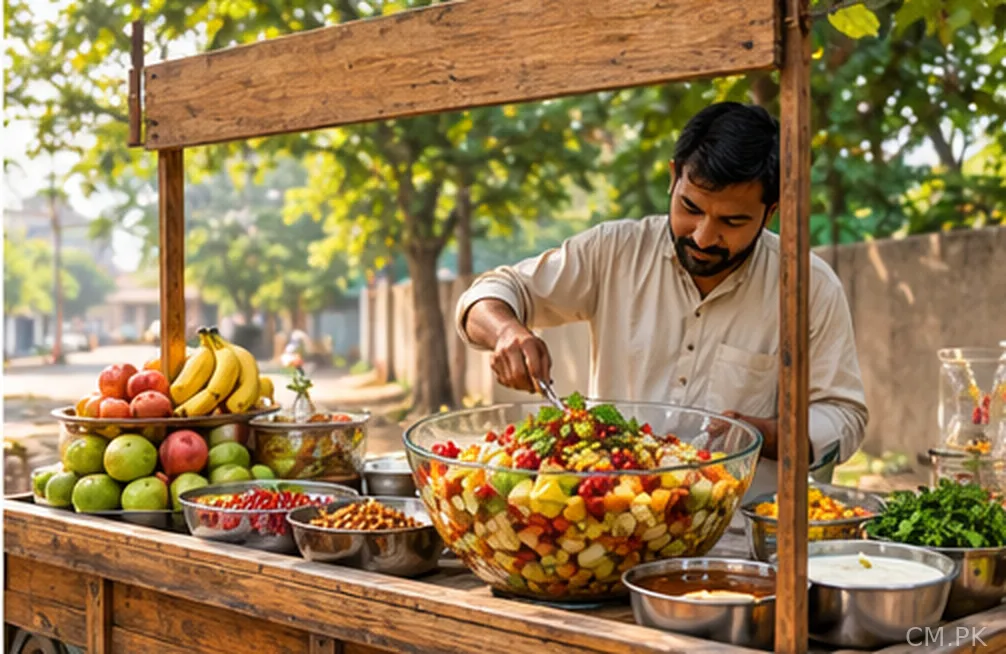
Bismillah Fruit Chat and Dahi Bhallay. Fresh fruit chaat — the tangy, spiced fruit salad Pakistan does better than anyone — and dahi bhallay, soft lentil dumplings under cool whisked yoghurt with imli chutney. It is the perfect pre-forest snack: light, refreshing and filling enough to power a long walk through the plantation. Stop on your way in, or better, on your way out when you have earned it.
Madni Kheer. Slow-cooked rice pudding, the desi dessert that ends every good food run. Locals rate Madni’s as the kheer worth stopping for in this area — creamy, properly cardamom-scented, the real thing. Buy a portion for the drive home; it travels well and it tastes like the trip actually happened.
One practical note for both: these are small local shops, not chains — hours follow the day’s rhythm and cash is the safe bet. Prices are qasba prices, not tourist prices. We deliberately do not print opening hours or rates we cannot verify; treat both as “walk in, point, eat” rather than booking anything ahead.
Inside the Forest: Picnic First
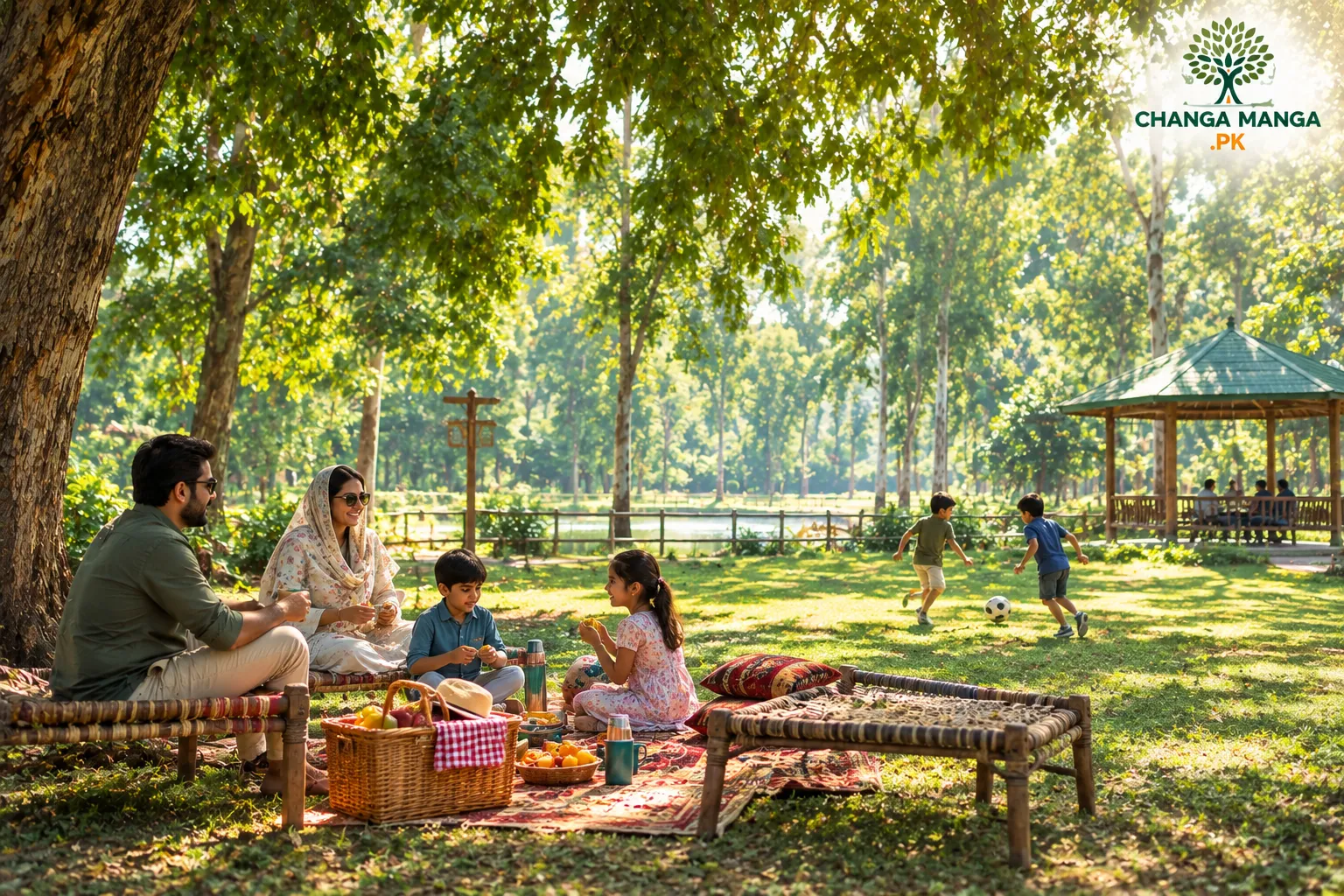
The forest itself runs on picnic culture, and this is the part to plan properly. Pakistani families do Changa Manga the classic way: a big cloth, a cooler, biryani or chicken pelau, rotis, salads, cold drinks — a full meal under the trees. The lawns and picnic shelters are built for exactly this. Two rules keep it enjoyable for everyone after you:
- Carry every wrapper out. The forest’s clean paths are not luck; the people who love it take their waste back to town. A spare shopping bag for trash is the cheapest thing in your bag and the most important.
- Never feed the animals. Not the boar, not the macaques, not the birds. Feeding changes their behaviour and harms their health — our responsible tourism guide explains why this rule has no exceptions.
Full Meals: The Realistic Options
If your group needs a proper seated meal rather than a picnic, the honest answer is to plan it around the drive. Coming from Lahore, the N-5 corridor through Bhai Pheru and Pattoki has the region’s real restaurants — dhabas and family dining both — and the route and driving guide covers the road choices. From the Kasur side, Phool Nagar and the district’s towns carry the same role. Heading for the Rana Safari Park side instead? Kasuri Zaiqa’s Rana Resort guide covers the daig and per-head food orders at the park’s gate. The workable pattern locals use: eat a full meal on the way, do fruit chaat and dahi bhallay at the town, and let the kheer finish the day.
Staying overnight is its own topic — the forest’s motel and rest houses are on the official record but hard to book in normal times, and the where to stay guide handles that question honestly. Most visitors, realistically, do this as a day trip with a picnic bag, and that is the version of the trip that works.
A Forest Ingredient You Can Taste: Honey
One food at Changa Manga comes from the forest itself: honey. The plantation’s beekeepers work the flowering rows every season, and the harvest story is genuinely documented — Reuters reported the forest’s annual honey harvest nearly doubling in a single year, from 725 kg to about 1,300 kg, as restoration planting expanded. Local honey from the area makes the most honest souvenir this trip can offer: the forest, in a jar. The full story — the beekeepers, the economics, the quotes — is in our forest honey article.
The Pack-Right Food Checklist
- Water, more than you think — the plantation’s shade is real but distances are long.
- The picnic core: biryani or pelau, rotis, something fresh, cold drinks.
- A cloth or blanket and a spare bag for trash.
- Cash for the town shops — chaat, dahi bhallay, kheer.
- Nothing for the animals — seriously, nothing.
Eat the way the town eats: simple, fresh, unhurried. Fruit chaat before the walk, your own biryani under the trees, kheer for the road — that is Changa Manga’s food scene, and it does not need a restaurant to be remembered. For everything else the forest offers, the forest guide is the map.
New here? The Changa Manga visitor guide opens with the current status, timings and ticket basics.