
A wildlife video tagged Changa Manga can collect 23,000 views in a matter of weeks. Some of what circulates is real — wild boar piglets wallowing after the rains, mist off the plantation at dawn. And some of it is not: lions walking through savanna grass, wolves howling under a full moon, posted as if the forest were hiding big cats all along. The comment sections fill with nostalgia and pride, and nobody asks the basic question: what does the ecological record actually say lives here? This page answers it plainly, because the truth is better than the fakes — and it is verifiable.
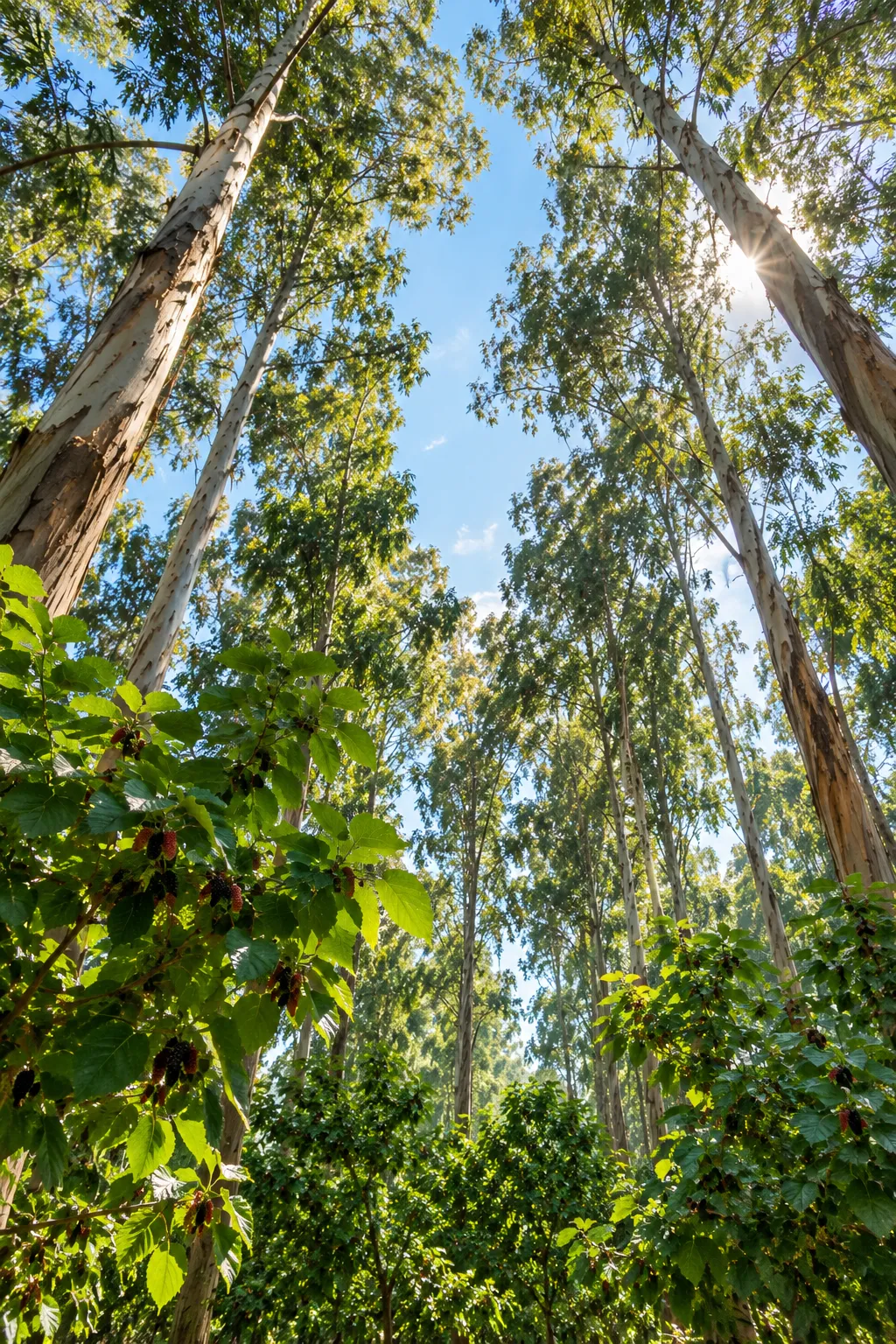
The Short Answer
- Lions? No — and there never were any, wild or otherwise, in the forest’s records.
- Wolves? No — no assessment of the forest has ever recorded one. What you hear at night is the golden jackal chorus.
- Wild boar (pigs)? Yes — abundantly. They are the easiest large mammal to find signs of, and the piglet clips you see online are entirely believable.
- Also on record: mongooses, porcupines, peafowl and roughly fifty bird species — plus Pakistan’s only vulture breeding centre.
Our full wildlife guide covers all of these in depth; this page is the myth-busting companion, built for the questions people are actually typing after watching the viral clips.
Lions in Changa Manga? The Record Says No
Start with the physical facts. Changa Manga was planted in 1866 as a timber plantation and has been surveyed, worked and documented continuously since. The published ecological assessments of the Kasur district forests list golden jackals, wild boar, mongooses and porcupines among the resident mammals. No big cat appears on any of those lists — not the lion, not the leopard, not the tiger. And Pakistan itself has no wild lion population: the world’s last wild Asiatic lions survive only in India’s Gir Forest, more than a thousand kilometres away. A lion walking through tall golden grass is a savanna image, and savanna is exactly what it is.
Could the managed zoo area have held lions? We found no reliable record of it, and we deliberately do not publish zoo claims we cannot verify. What we did trace, repeatedly, is this: every dated news story about a “lion safari” in Punjab refers to Lahore Zoo Safari — not Changa Manga. As for the future: the official safari park scheme describes “wildlife safari and display enclosures in natural habitats” and names no species at all. If a species list is ever officially announced, our safari park tracker will carry it the same day.
Wolves? What You’re Hearing Are Jackals
The “wolves howling at Changa Manga” clips are the most interesting myth, because they are built on something real: the forest does howl at night. The golden jackal (Canis aureus) — siyar in Urdu — is Changa Manga’s most famous voice, a pre-dawn chorus from deep in the plantation that is a genuinely wild sound for a wood only 74 km from Lahore. To untrained ears, a jackal chorus at 3 a.m. is absolutely wolf-like. Many online “wolf” videos simply pair exotic or AI-generated footage with that kind of sound.
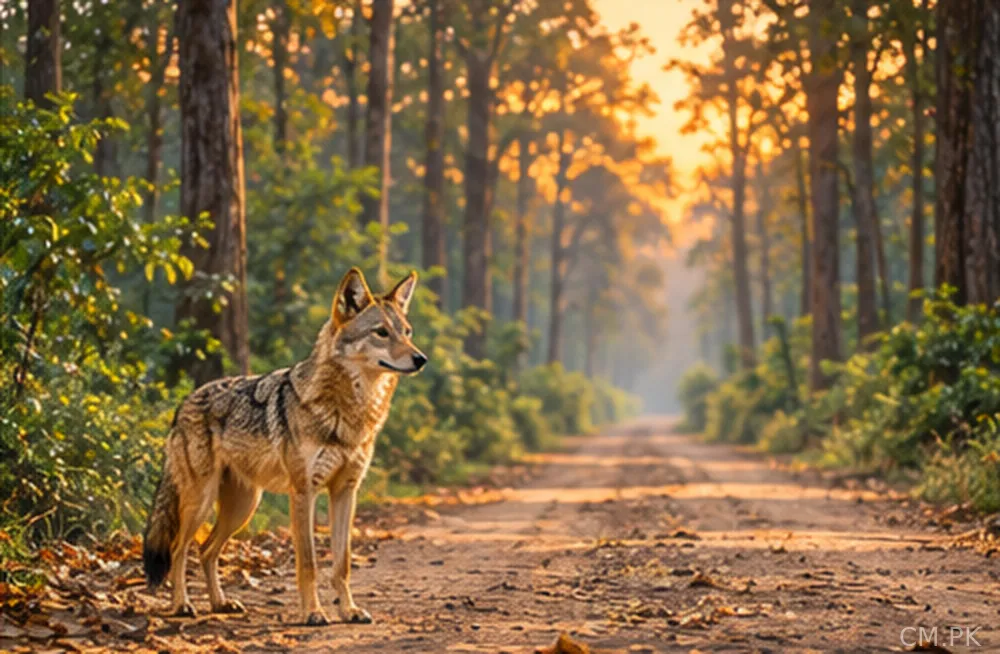
The animal itself, though, is no wolf. Jackals are smaller — roughly shoulder-high to a well-fed dog — trot with the tail held low, and hunt alone or in pairs rather than packs. Grey wolves in Pakistan survive mainly in the country’s arid western ranges and the northern mountains, landscapes nothing like an irrigated plantation belt in Kasur. No wolf has been recorded in any published assessment of this forest. So if a video shows a heavy-shouldered wolf snarling under pines and says “Changa Manga”, the habitat and the species are both telling you it came from somewhere else.
Wild Boar: Yes — and They Are the Easiest to Actually See
Here is where the viral clips and the field record agree: the pigs are real. The wild boar is recorded as a resident mammal in the ecological assessments, and it leaves more visible traces than every other wild mammal combined. Walk the quieter plantation edges and you find churned earth where sounders have rooted overnight; spend a patient dusk near a quiet track and there is a fair chance of seeing a family group cross in single file. After the rainy season, sows bring piglets into the open — which is precisely the footage local social pages film, and the reason those piglet videos ring true.
Two honest notes for anyone hoping to see them. First, respect: boar are strong wild animals, sows with piglets are defensive, and feeding wildlife changes behaviour and harms health — the rules in our responsible tourism guide apply to boar most of all. Second, perspective: for every boar you actually see, you will find twenty signs of one. That is not a disappointment — that is what a working forest looks like. And a third note on legality: the pigs are protected inside this forest — hunting here is prohibited, whatever the outfitter pages borrowing the name suggest; our hunting-rules fact-check walks through the law and the licences.
Why Fake Wildlife Clips Travel So Far
The economics are simple: wildlife drama gets views. On one Changa Manga-themed page we checked, the “wolves howling” clip had collected some 23,000 views — far more than the page’s genuine forest footage — while other posts on the same page carried Facebook’s own “AI content” label. The usual giveaways are consistent: savanna grass that does not grow in Kasur, species that are not on any record for the forest, dramatic added sound, and no location details that could be checked. Our editorial rule is the counterweight: this site publishes only what a source documents, and labels everything else as an impression. When you watch a clip, the two fastest checks are the habitat and the species list — if either is wrong for Changa Manga, the clip is somewhere else.
What Is Actually on Record
For the record, in one place — each of these traces to a published source in our forest guide:
- Golden jackal (siyar) — resident; the pre-dawn chorus.
- Wild boar (jangli soor) — resident; the most visible traces.
- Mongooses and porcupines — resident; porcupine ecology here has even been peer-reviewed and published in a 2026 scientific paper.
- Peafowl and roughly 50 bird species — the plantation is a notable birding site; see the birdwatching guide.
- The vulture centre — WWF-Pakistan’s breeding facility, the country’s only ex-situ vulture conservation initiative, home to 33 birds; full story in the vulture centre article.
- Honey bees — the forest’s honey economy doubled its harvest in documented years; see the honey article.
- Hog deer and nilgai — associated with the managed park side, with press reports of deer losses in the 2023 fire and a nilgai relocation in 2025; we treat the zoo-side population as changing until the redevelopment clarifies it.
That is the real cast list: no lions, no wolves, and no need for them. Notice that it is a longer list than the fakes imply — the forest’s actual biodiversity outruns its mythology.
How to Meet the Real Forest
The practical part. Wildlife here is seen at the forest’s own hours: the first two hours after sunrise and the hour before dusk, with winter mornings the most generous of all — the timing guide explains the pattern. Bring binoculars rather than a long lens; distances inside the plantation are long and the light is dappled. Walk quietly, stay on the paths and lawns, and let the forest come to you. One caveat for planners: the forest park has been reported temporarily closed for the redevelopment, so check the current status page — or its Roman Urdu twin, Changa Manga kb khule ga? — before driving out. The opening timings page explains why published hours shift by season — worth a read before a long drive.
And when you do get your own footage, do it the honest way: geotag it, date it, and let the location speak. A jackal chorus filmed in Changa Manga at dawn is worth more than a borrowed lion — because it is true, and truth, unlike the fakes, keeps travelling.
Full visitor information lives on the Changa Manga forest homepage — status, timings and tickets.