
Walk through Changa Manga and you see picnic lawns, lake water, rows of tall trees. Walk through it with a scientist’s eyes and you see something rarer: a living laboratory that has been running, more or less continuously, for over a century. This is one of Pakistan’s most-studied forests — its management plans, its mosquitoes, its mushrooms and its porcupines have all made it into print — and almost none of that paper trail is common knowledge. Here is the record, with the receipts.
A Forest Born From a Working Plan
The paper trail starts almost with the forest itself. A Working Plan for the Changa Manga Plantation, dated 1917, survives in the Biodiversity Heritage Library — a digitised copy of the British-era management document that set down how the plantation’s blocks would be planted, thinned and harvested. That document is why the forest exists in its recognisable form: Changa Manga was never wild woodland that got protected, it was an industrial plantation managed on paper from the beginning — and the 1917 plan is the paper. Few forests anywhere can show you their own birth certificate; this one can, and you can read it online today.
That plan’s descendants still govern the forest. The block-and-rotation system it describes — timber blocks cut and replanted in turn — is the same geometry you see from the forest railway today, and the tree species list it managed is the one the forest still grows.
Even the Mosquitoes Got Studied
The strangest citation in the file: in 1982, the Transactions of the Royal Society of Tropical Medicine and Hygiene published an entomological study of West Nile virus mosquito surveys conducted “at Changa Manga National Forest”. In the early 1980s this planted forest served as a field station for public-health science — its bird populations, water bodies and mosquito ecology making it a natural place to monitor a virus that cycles between birds and mosquitoes. It is a reminder that “national forest” here has always meant more than recreation: the ground has been an instrument of science for generations, sometimes in ways no visitor would guess.
New Species Named From Changa Manga
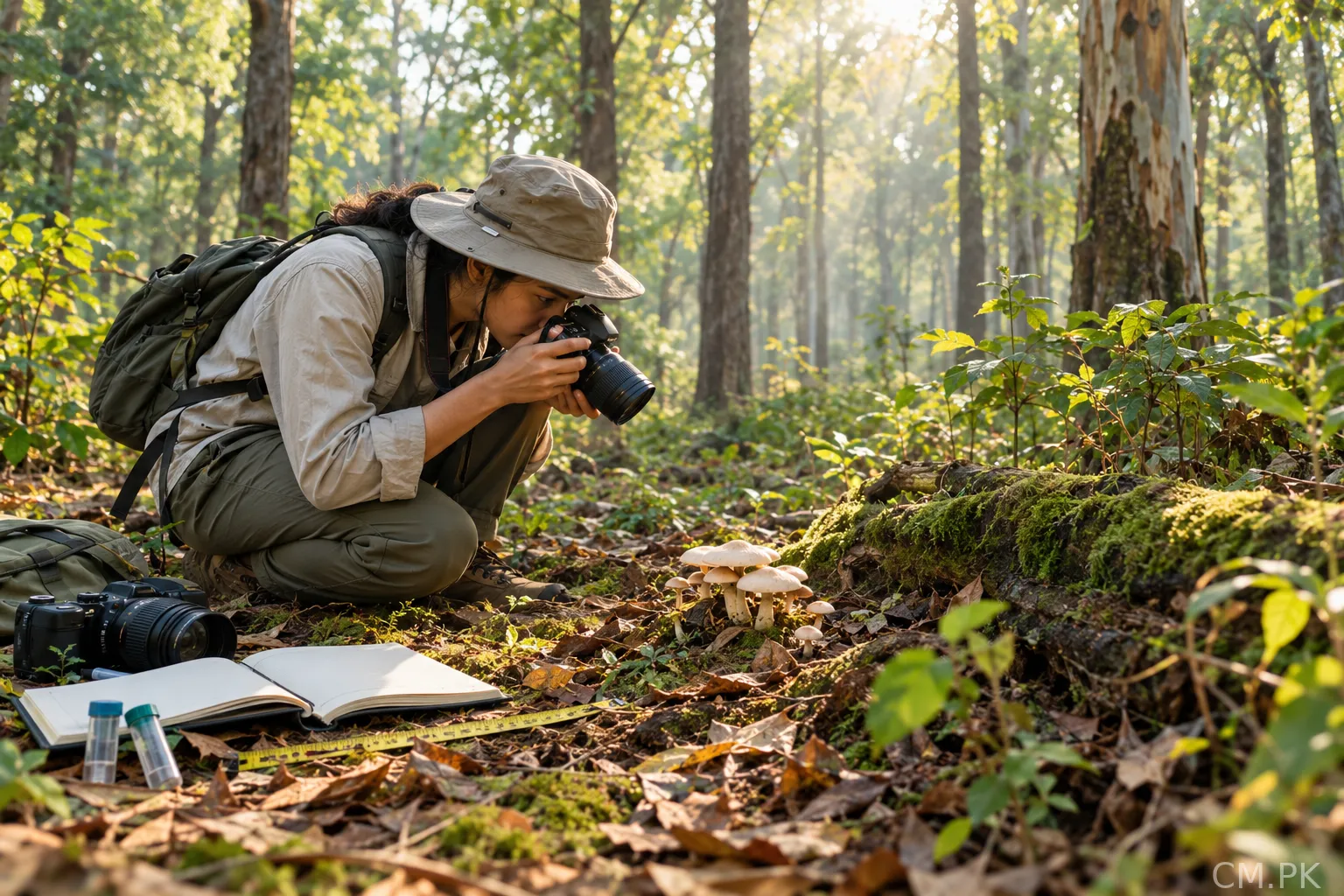
Here is the section most people find genuinely surprising. Since 2020, taxonomists have formally described at least six fungal taxa new to science from Changa Manga — organisms collected inside this one forest, studied, and given formal scientific names in international journals:
- Agaricus species — the genus of the common field mushroom — described in Scientific Reports (2021)
- Aspergillus pakistanius, described in 2020 and carrying the country’s name
- Leucoagaricus species novum, in Phytotaxa (2023)
- Leucoagaricus rosuliformis, also in Phytotaxa (2024)
- Lepiota species novum, in Nova Hedwigia (2024)
- Limacella species novum, described in a 2022 study
Each of these carries a DOI — a permanent, checkable identifier — which is exactly why this site is comfortable publishing the claim: “a new species was discovered here” is not a story, it is a citable fact. And the discovering continues: a 2026 paper in Scientific Reports studied the forest’s porcupine ecology, following a line of research that includes the forest’s climbing-plant communities (2022) and the invasion biology of Vachellia farnesiana, an exotic acacia pushing into the plantation (2025). The wildlife overview covers the animals; the papers cover what the animals live among.
What This Means for a Visitor
Honest answer: there is no laboratory tour, no visitor centre for the science, nothing to photograph but the trees themselves. The value of knowing the record is different — it changes what the forest is in your mind. The ground under the picnic lawns has been managed, surveyed, argued over and published on for a hundred years; when the restoration programme replants a block or the development project redesigns the park, those decisions sit on top of a century of documented experiment. Few day-trip destinations anywhere can say that their trees come with footnotes.
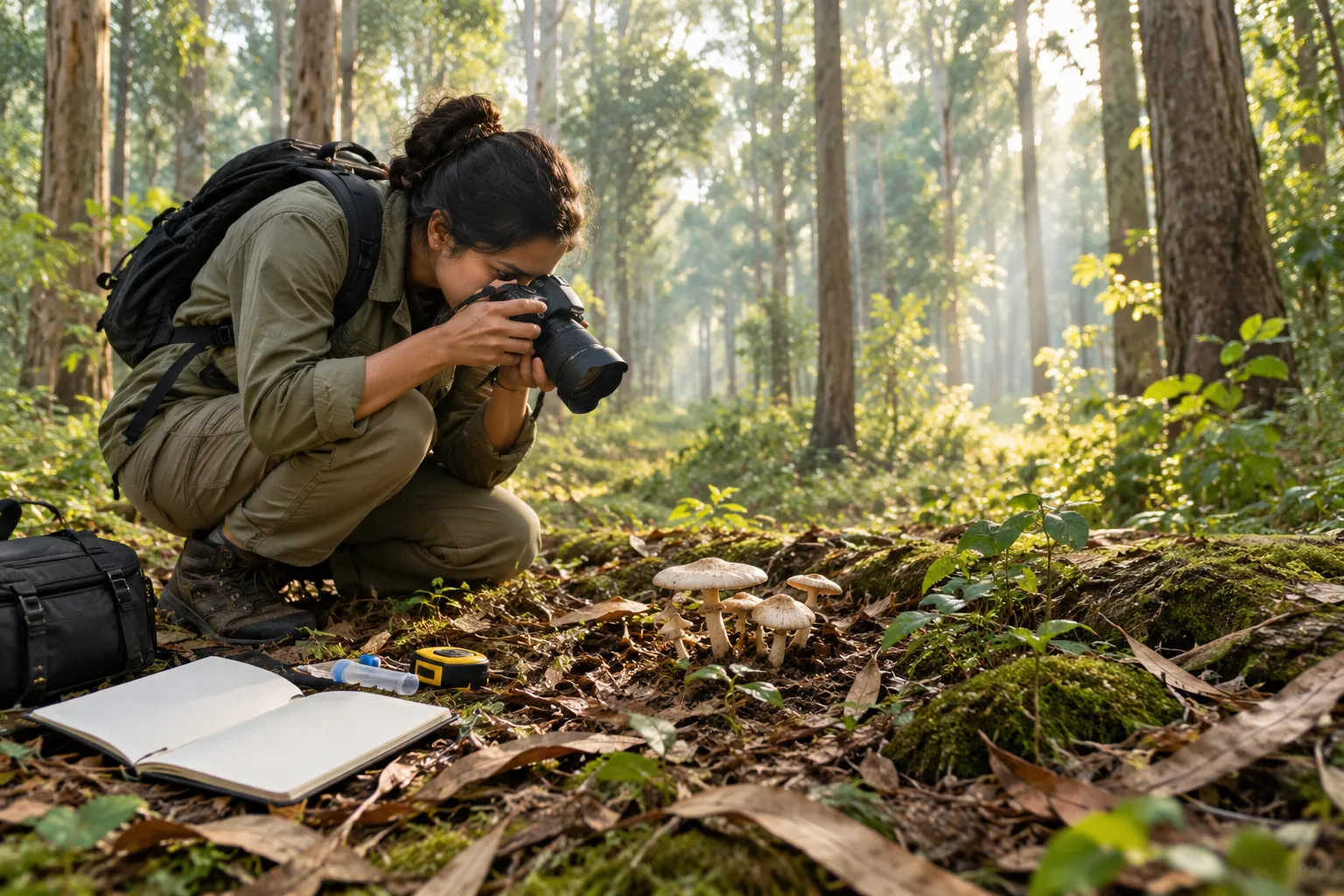
If the fungal discoveries catch your imagination, note the seasonality: fruiting mushrooms peak after the monsoon (July to September) — the same green season the best-time-to-visit guide describes, and a good reason to keep eyes on the leaf litter as well as the canopy. Foraging, though, is a different matter from science: leave the fungi where they grow, both for the forest’s sake and because misidentification among look-alike species is exactly how the field’s literature fills its case reports.
Why This Page Exists
Because the site’s whole method is to prefer the checkable to the repeated. Anyone can write that Changa Manga is “important for biodiversity”; this page instead shows the 1917 plan you can open, the 1982 journal you can cite, and six names in taxonomy that exist because someone collected a mushroom under these eucalyptus and thought: that one is new. The forest’s famous dacoit legend may be its most-told story — but its most documented one is this: a living laboratory, a century in, still producing firsts.
New here? The Changa Manga visitor guide opens with the current status, timings and ticket basics.