
Search “Changa Manga deforestation” and you meet two extremes: nostalgia posts calling it the largest man-made forest in the world, and alarm posts implying there is nothing left to save. The documented truth sits between them — a measured decline with a specific number, years of illegal cutting reported in print, and an official restoration programme whose ledgers are public. We checked all of it on 15 October 2026; here is what can actually be sourced.
Status note (15 Oct 2026): the forest park is widely reported as temporarily closed for the eco-tourism redevelopment, with no official reopening date announced. Read the current status before planning a visit. This article is about the forest itself — its history of loss and recovery.
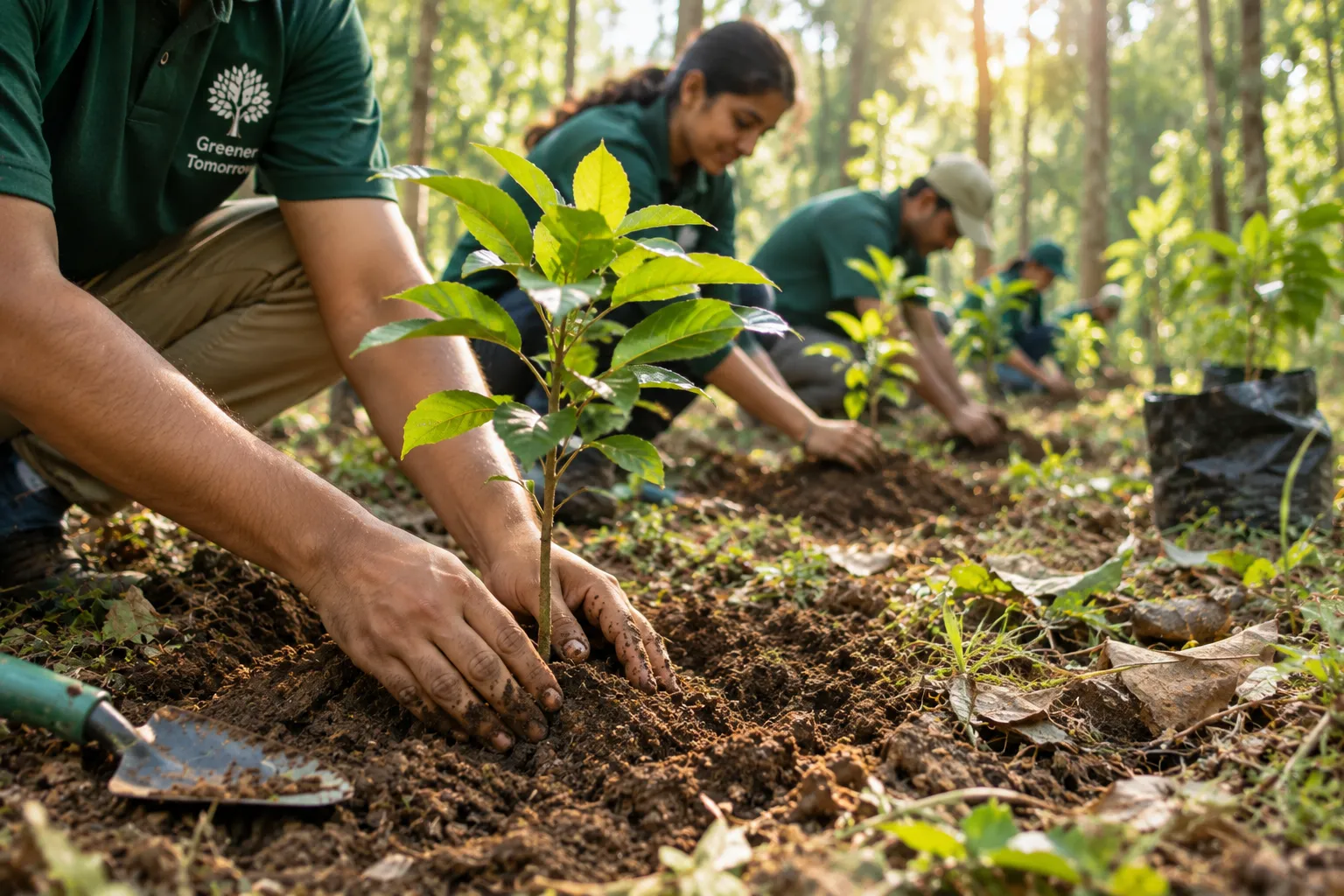
Once the World’s Largest Hand-Planted Forest
Changa Manga was planted by British foresters in 1866 to grow railway timber — a 12,510-acre irrigated plantation, per the department’s own plantation page, and for decades it was described as the largest man-made forest in the world. That origin matters to this story: nothing here was self-sown. Every tree in the old photographs was a decision, and every loss was a decision too. Our history article tells the planting story in full.
The Decline, in Numbers
The figure most often cited comes from a documented case study of the forest’s rehabilitation: over the years, mismanagement and illegal deforestation decreased the woodland by 75 per cent, as measured in 2012. The same study records that the Punjab government approved an “Afforestation in Blank Areas in Changa Manga Plantation” project in 2014 in response. That 75 per cent is the sober, sourced answer to “what happened to Changa Manga” — neither a rumour nor a rounding error. What the decline and the recovery mean on the ground — species mix, regeneration, the measurement science — is in our field-science explainer.
The cutting was not ancient history, either. A Dawn reader letter of 1 June 2023 states that “trees in Changa Manga are being cut illegally for many years”; a Tribune letter of 10 May 2023 describes the same pattern and blames a lack of regulation. Letters are correspondence, not investigations — we cite them as evidence of public record, not as statistics. But they describe a loss locals had watched with their own eyes, and Wikipedia’s summary reflects the same consensus: once the largest man-made forest in the world, subject to massive illegal deforestation in recent times.
The Restoration Ledger
Now the other half of the story, which the alarm posts skip. The Punjab government’s own monitoring and evaluation report for the plantation records the plan in one line: the forest — which it measures at 12,560 acres along a 40 km boundary — “would be fenced along with double row planting on the same 40 kms”. Departmental updates compiled since describe the work actually done: a two-row boundary planting, 30 km of barbed-wire fencing on RCC posts, new boundary walls and main gates — and 1,500 acres replanted, with roughly 4,000 acres still pending and 150,000 poplars among the stock. Restoration began earlier, too: funds for eco-friendly fencing were reported as released back in 2015.
Read those numbers honestly. Half-finished is half-finished — “pending” acres are still blank, and a fence protects only while it is maintained. But the direction of travel is the opposite of the headlines: the forest is being re-enclosed, re-planted and re-staffed, not abandoned.
Why This History Matters to Your Visit
Three practical reasons. First, the redevelopment now under way — the Rs 8,710.570 million eco-tourism scheme detailed in our project tracker — is easier to judge fairly when you know what came before it: a forest that was nearly lost once and cannot afford to be lost again. Second, some of what looks like “damage” around the edges is restoration in progress — blank replanting blocks, young saplings in protective tubes, fencing lines; walk responsibly around them. Third, the wildlife you may glimpse — from jackals to the vultures of the WWF breeding centre — survives in this forest precisely because someone kept planting. The ecosystem is young and recreated; treat it that way.
Questions People Actually Ask
Was Changa Manga really the largest man-made forest in the world?
It was long described that way, and the description is still the most common one-line introduction. Sources agree on “once”; the exact claim of superlative is historical reputation rather than a current measurable title. What is current and measurable is the decline and the replanting, as documented above.
How much of Changa Manga was cut down?
The most specific sourced figure is the 75 per cent decline recorded in a 2012 measurement, from the documented rehabilitation case study. No official figure for total area lost in any single year has been published; we do not print percentages we cannot trace.
Is the forest still being cut illegally?
Recent letters (2023) describe years of ongoing illegal cutting, and no source we checked states that it has stopped. The restoration programme — fencing, boundary walls, replanting — is the official response. Current on-the-ground conditions cannot be verified from here; the newest visitor reports after reopening will say more than any list can.
Is Changa Manga still worth visiting?
That is a question for the reopening, not this article — the park is reported closed for redevelopment. But 12,000-plus acres of hand-planted forest with a steam-era railway, a lake and a conservation story found nowhere else in Pakistan does not stop being remarkable because of its scars. The scars are part of the tour, honestly told.
Where This Leaves You
Changa Manga’s deforestation story is real, measured and partly reversed — 75 per cent lost by one 2012 measure, thousands of acres re-fenced and re-planted by official programme, and a tourism scheme now betting that the forest’s best use is being seen. When the gates reopen, you will be walking through the most interesting chapter yet: a forest on its way back, on the record.
Every figure above traces to a source recorded on 15 October 2026 — the department’s plantation page, a documented rehabilitation case study, two 2023 reader letters, an official M&E evaluation report and departmental updates. We publish no statistic we cannot trace.
Full visitor information lives on the Changa Manga forest homepage — status, timings and tickets.